History · Leadville
Leadville's Tabors: a silver fortune, a scandal and the crash
An 1878 grubstake made Leadville storekeeper Horace Tabor a silver millionaire; debt and the 1893 crash took it. The Tabors' documented story, and the legends.
By Lerner Works · Published
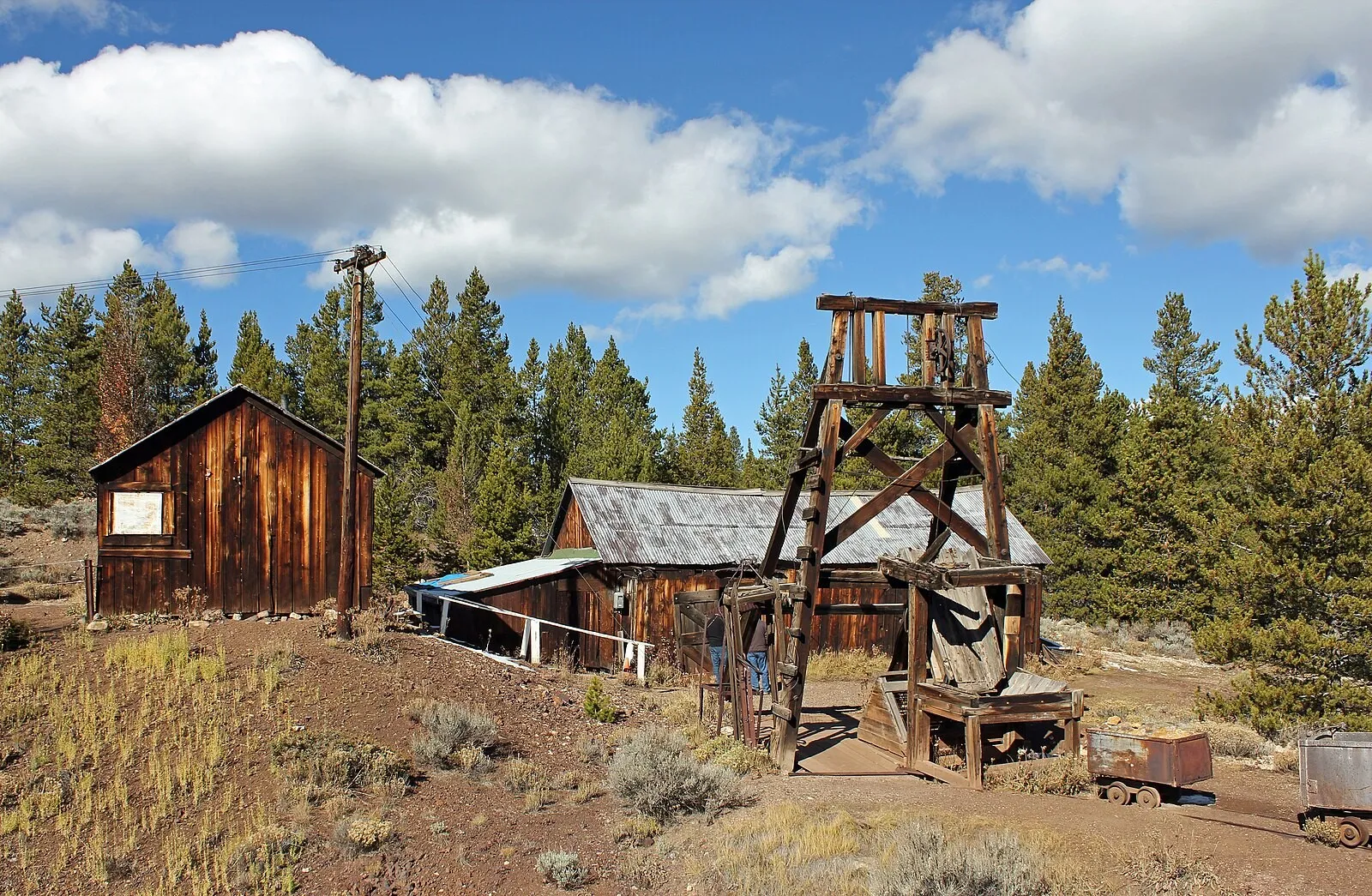
In April 1878, two prospectors, August Rische and George Hook, came into the Tabors’ store in Leadville. Horace Tabor grubstaked them, trading supplies for a share of whatever they found, and they found the Little Pittsburg mine. Within a few years, Tabor had become a silver millionaire. But declining mine profits and mounting debt weakened his fortune before the crash of 1893 helped finish it.
Leadville still has the opera house the fortune built and the mine where the story ended. It also has a good deal of legend.
Twenty years in the camps
Augusta Pierce married Horace Tabor in January 1857, and in 1859 they came to Colorado in the Pikes Peak gold rush with their young son, Maxcy, the Colorado Encyclopedia’s biography of Augusta records. Her work helped sustain the family long before the fortune arrived.
For the next two decades they moved from camp to camp. Augusta baked and sold bread and pies, cooked for miners, nursed the sick, did laundry, took in boarders and weighed gold dust. At Buckskin Joe, Horace held the title of postmaster, but by the encyclopedia’s account Augusta did most of the post office work, and at Oro City she ran the store and handled the mail. Horace, meanwhile, grubstaked miners on the side.
The Matchless and the money
At one point the Little Pittsburg produced around $10,000 a day. Horace sold his one-third share and bought into the Chrysolite and the Matchless. The National Mining Hall of Fame and Museum, which now owns the Matchless, says he bought it on July 17, 1880, for $77,850. Rich ore turned up that September, and the mine paid him about $1.2 million through 1886. By 1887, the Hall of Fame says, the ore was depleted, and Tabor fell into debt that lasted the rest of his life.
Much of the money stayed in Leadville. Tabor built the Tabor Opera House in 1879, in 100 days by the opera house’s count, and the Hall of Fame notes he put money into the town’s telephone and gas companies. He was elected lieutenant governor in 1878, and in January 1879 the Tabors bought a mansion in Denver. Augusta disliked the spending, and the two grew apart.
Baby Doe, and a divorce that made national news
Elizabeth McCourt was born in Oshkosh, Wisconsin, in 1854. She married Harvey Doe in 1877, moved with him to Central City, filed for divorce in 1880 and moved to Leadville, where she met Horace Tabor, according to the Colorado Encyclopedia. By the summer of 1880, Horace had moved out of his home with Augusta.
In 1882 Augusta went to court, charging Horace with desertion and asking for $50,000 a year in support. He pressed for a divorce. That September he and Elizabeth married in secret, before his divorce from Augusta was final. Augusta’s divorce became final in January 1883. She received two properties valued at $250,000, from an estate worth several million dollars.
Horace was then filling a brief interim term in the U.S. Senate. He and Baby Doe held a public wedding in Washington on March 1, 1883, with President Chester A. Arthur attending, the encyclopedia’s Horace Tabor entry notes. The quick divorce and his marriage to a woman half his age made national news, and polite society shut them out. They had two daughters: Lily, born in 1884, and Rose Mary, called Silver Dollar, born in 1889.
1893: the crash
The national panic of 1893 began in May, with a stock market crash, railroad bankruptcies and a run on the government’s gold, historians at the Federal Reserve Bank of New York write. Later that year Congress repealed the Sherman Silver Purchase Act’s requirement that the Treasury buy about 4.5 million ounces of silver a month. In Leadville, the town’s visitor site says, the crash brought mine closures, economic collapse and a sharp drop in population.
The Tabors were ruined. They pawned many of their possessions and faced lawsuits, and Horace went back to the mines as a laborer, including in Cripple Creek. In 1898, his health failing, he was appointed postmaster of Denver. He died of appendicitis in April 1899, nearly penniless. The encyclopedia cites the Aspen Tribune’s count of more than 10,000 people at his funeral.
The Matchless years, and what is legend
The best-known line in the story probably never happened. For decades, writers reported that Horace told Baby Doe on his deathbed, “Hang on to the Matchless. It will make millions again.” The Colorado Encyclopedia says later research disproved it, and that the writer Caroline Bancroft, who helped spread it, admitted before her death in 1985 that it was false. By 1899 the mine was largely worked out and flooded.
What is documented is that Baby Doe went back to Leadville with her daughters. Why is not known. After a sheriff’s sale in 1901, her sister, Claudia McCourt McCabe, bought the mine back in 1902 and gave her power of attorney, the encyclopedia’s Matchless Mine entry says. When it was foreclosed in 1928, the new owner, the Denver businessman J. K. Mullen, let her keep living in the cabin. Mullen and Margaret “Molly” Brown were among the people who helped support her.
She lived alone in the small cabin at the mine, returned to the Catholic Church, did daily penances and filled journals with her dreams, memories and visions. Locals regarded her as a madwoman; the encyclopedia describes her as a decent writer. Her daughter Lily moved to Wisconsin. Silver Dollar went to Denver and wrote for The Denver Post.
Baby Doe died alone at the cabin in the winter of 1935. The Hall of Fame, which now owns the site, dates her death to February 20 and says she was not found until March 7. The Colorado Encyclopedia says she was found frozen and had apparently died of heart failure. Local legend has her dying with nothing; the Hall of Fame says she had food, money and coal.
How the three lives ended
Horace died nearly penniless in 1899, and Baby Doe spent much of her last 35 years at a worked-out mine. Augusta’s story went the other way.
She left the marriage with a small share of the fortune, invested it in Colorado and New Mexico property, and stayed active in business and charity in Denver. When she died in Pasadena, California, on January 30, 1895, her estate was worth at least $1 million, which made her one of Denver’s wealthiest women. In 1991 she was inducted into the Colorado Women’s Hall of Fame and into the National Mining Hall of Fame, the museum that now owns the Matchless.
The romance became an opera, The Ballad of Baby Doe.
Visit these places
- Tabor Opera House, on Harrison Avenue: the theater Tabor built in 1879, now being restored. Events and tours.
- Matchless Mine and Baby Doe’s cabin, east of town: a self-guided surface site, open in summer. National Mining Hall of Fame.
More on the town: Leadville.
Accounts of the Tabors differ in places. Dates and figures for the Matchless follow the National Mining Hall of Fame, which owns the mine; where the Colorado Encyclopedia differs, as on Baby Doe's death, both are given.